
If you are replacing windows in a Northern Indiana home, one of the first questions your contractor will ask is whether you want double-pane or triple-pane glass. For many homeowners, the answer is automatic: triple pane sounds better, so triple pane it is. But the right answer depends on your specific situation, and the premium for triple pane is not always justified.
This guide explains exactly what makes a window energy efficient, how double-pane and triple-pane windows compare across the factors that matter most in Indiana’s climate, and how to decide which option is the better investment for your home.
What Makes a Window Energy Efficient?
Energy efficiency in a window is not a single property. It is the product of several interacting factors, each of which contributes to how well the window controls heat transfer between the inside of your home and the outside environment.
U-factor
The U-factor measures how much heat the window allows to pass through it. A lower U-factor means better insulating performance. This is the most important rating for heating-dominated climates like Northern Indiana, where keeping heat inside during winter is the primary concern. Standard double-pane windows typically have U-factors in the 0.27 to 0.40 range. High-performance double-pane units can reach 0.20 to 0.25. Triple-pane windows commonly achieve U-factors between 0.15 and 0.20.
Solar Heat Gain Coefficient (SHGC)
The SHGC measures how much solar energy passes through the glass into the home. A higher SHGC means more passive solar heat gain, which can be beneficial in winter but problematic in summer. In Indiana, which experiences both cold winters and hot summers, a moderate SHGC in the range of 0.25 to 0.40 is generally appropriate. Low-E coatings are the primary tool used to control SHGC.
Low-E glass coatings
Low-emissivity (low-E) coatings are microscopically thin metallic layers applied to the glass surface. They reduce the transmission of infrared energy, which is the primary mechanism of heat loss through glass. Virtually all modern energy-efficient windows, both double and triple pane, use low-E coatings. The specific coating type determines whether the window is optimized more for winter heat retention or summer solar rejection.
Gas fill between panes
The space between glass panes in an insulated unit is filled with an inert gas, either argon or krypton, rather than air. Both gases conduct heat less readily than air, improving the thermal performance of the unit. Argon is the most common and most affordable. Krypton provides slightly better performance and is used in applications where a thinner overall unit is required, such as triple-pane windows where the total thickness needs to remain manageable.
Frame material
The frame material affects the overall thermal performance of the window assembly. Vinyl frames are standard for most residential replacement windows in Northern Indiana and perform well thermally because vinyl is a poor conductor of heat. Fiberglass frames offer similar or slightly better thermal performance. Aluminum frames without a thermal break perform poorly in cold climates and are generally not recommended for Northern Indiana homes.
How Double-Pane Windows Work
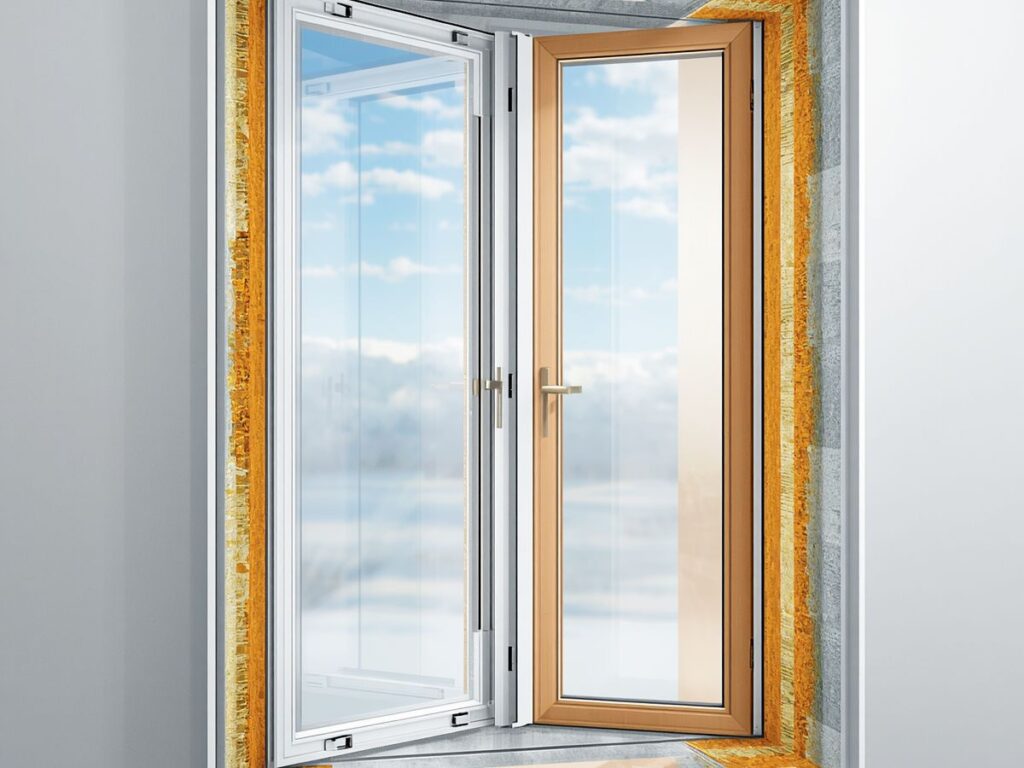
A double-pane window consists of two panes of glass separated by a spacer and sealed to create an insulated glass unit. The space between the panes is typically filled with argon gas and treated with a low-E coating on one or both interior glass surfaces. The sealed unit provides significantly better insulation than a single pane of glass and is the standard for virtually all new residential window installations in the United States.
Quality double-pane windows with argon fill and a good low-E coating will have U-factors in the 0.22 to 0.30 range and will meaningfully outperform older double-pane units with air fill and no low-E coating, which is what many Northern Indiana homes built in the 1990s still have. Replacing those older units with modern double-pane windows produces a noticeable improvement in comfort and energy performance.
How Triple-Pane Windows Work
A triple-pane window adds a third layer of glass, creating two sealed air spaces instead of one. Each space is gas-filled and the glass surfaces carry low-E coatings. The result is a window with substantially lower heat conductivity than a double-pane unit. Triple-pane windows are the standard in Scandinavian countries and other extremely cold-weather markets, where their superior insulating performance is consistently worth the additional cost.
In Northern Indiana, the case for triple pane is real but more nuanced. The climate is cold enough that triple-pane windows produce meaningful energy savings compared to double pane, particularly in homes with large window areas facing north or west. But the payback period is longer than in climates farther north, and the additional cost per window is significant.
Double Pane vs Triple Pane: Side-by-Side Comparison
Thermal performance
Triple-pane windows outperform double-pane windows on U-factor by a meaningful margin. A quality triple-pane unit will typically have a U-factor 25 to 35 percent lower than a comparable double-pane unit. In practical terms for a Northern Indiana home, that means less heat loss through each window on a cold winter day and better temperature uniformity in rooms adjacent to large window areas.
Cost
Triple-pane windows cost approximately 20 to 30 percent more than equivalent double-pane units on a per-window basis. For a full home replacement project, that premium can add up to several thousand dollars. The energy savings from triple pane are real but incremental, and at Indiana energy prices, the payback period on the additional investment is typically in the range of 10 to 15 years. Double-pane windows produce the majority of the efficiency gain at a lower upfront cost.
Comfort near windows
One of the most compelling arguments for triple-pane windows in Indiana is comfort, not just energy savings. The interior surface of a double-pane window will be noticeably colder than room air on a below-zero night. That cold glass surface creates a radiant chill effect that makes the area near windows uncomfortable even when the thermostat is set at a comfortable temperature. Triple-pane windows maintain a warmer interior glass surface, which makes sitting near windows in winter significantly more comfortable.
Noise reduction
Triple-pane windows provide better acoustic performance than double-pane units, primarily because the additional mass and the second air space attenuate more sound energy. For homes near busy roads, flight paths or commercial activity in Fort Wayne or Auburn, this can be a meaningful benefit beyond energy performance.
Weight and installation
Triple-pane windows are substantially heavier than double-pane units. This is generally not a structural concern for standard residential window openings, but it does make installation more demanding and means the window hardware including hinges, lifts and balances needs to be rated for the heavier weight. In retrofit situations where the existing rough opening is being reused, confirm that the framing can support the additional load.
Durability and lifespan
Both double and triple-pane windows are subject to seal failure over time, which results in fogging between the panes. Triple-pane units have more seals that can potentially fail, but the quality of the sealing technology in modern windows is high, and the difference in failure rate between quality double and triple-pane units is not significant. Both types, properly installed, should perform reliably for 20 years or more.
Which Is the Right Choice for Your Northern Indiana Home?
For most Northern Indiana homeowners replacing standard residential windows, quality double-pane windows with argon fill and a good low-E coating represent the best value. They deliver a dramatic improvement over older windows, have a shorter payback period, and perform reliably for two decades or more.
Triple-pane windows make the most sense in specific situations. If you have large windows on north or west-facing walls where heat loss is highest, triple pane reduces that loss meaningfully. If comfort near windows in winter is a priority, the warmer interior glass surface of triple-pane units is a genuine benefit. If you have a high-performance or highly insulated home where windows are the remaining weak link in the building envelope, triple pane brings that component into balance with the rest of the assembly. And if acoustic performance matters because of road or neighborhood noise, the triple-pane upgrade addresses two concerns at once.
The honest answer is that both options can be the right choice depending on your home, your budget and your priorities. A good window contractor will walk you through the trade-offs for your specific situation rather than defaulting to the more expensive option.
Tri-State Exteriors installs both double-pane and triple-pane replacement windows throughout Northern Indiana. Our window installation services include an honest assessment of which glass package makes sense for each home and a clear explanation of the cost difference and expected performance.
Other Energy Efficiency Factors to Consider
Proper installation matters as much as the window
The most energy-efficient window on the market performs poorly if it is not installed correctly. Gaps in the flashing or air sealing around the window frame allow air infiltration that can undermine the thermal performance of even the best glass package. Proper installation technique, including full perimeter air sealing and correct flashing to prevent water infiltration, is as important as the window specification itself.
Frame condition in replacement projects
In a replacement window project where a new window unit is being inserted into an existing frame, the condition of the existing frame affects overall performance. An otherwise good window in a deteriorated or air-leaky frame will underperform. Have the contractor inspect each frame before the project and flag any openings where full-frame replacement is warranted rather than a pocket insert.
ENERGY STAR certification
ENERGY STAR certified windows meet minimum performance thresholds set by the U.S. Environmental Protection Agency for the specific climate zone. Indiana falls in the Northern climate zone, which has the most demanding requirements. Looking for ENERGY STAR certification is a simple way to confirm that a window meets a baseline performance standard for use in Indiana’s climate.
Schedule a Free Window Assessment in Northern Indiana
If you are ready to explore window replacement for your home in Fort Wayne, Huntington, Auburn or surrounding Northern Indiana communities, Tri-State Exteriors offers free, no-obligation assessments. We will evaluate your existing windows, measure your openings and give you an honest recommendation on double-pane vs triple-pane and the options that make sense for your home and budget. Contact us today or call (260) 444-7448.
While planning your window upgrade, it is also worth evaluating your roofing system. Air sealing and insulation improvements across the whole building envelope, including the roof, produce greater combined savings than any single component upgrade. Learn about asphalt roofing options from Tri-State Exteriors.
Tri-State Exteriors | Serving Fort Wayne, Auburn, Huntington & Northern Indiana | (260) 444-7448 | tri-stateexteriors.net